
For an isolated problem
Repair
Address a localized leak, open seam, puncture, or flashing issue when the surrounding roof is still serviceable.
Commercial roofing · Wichita Falls & Denton
Roof repair, restoration, replacement, and maintenance for owners and facility teams. Get a clear scope and a plan that accounts for the business below.
Owner-led service · Two local offices
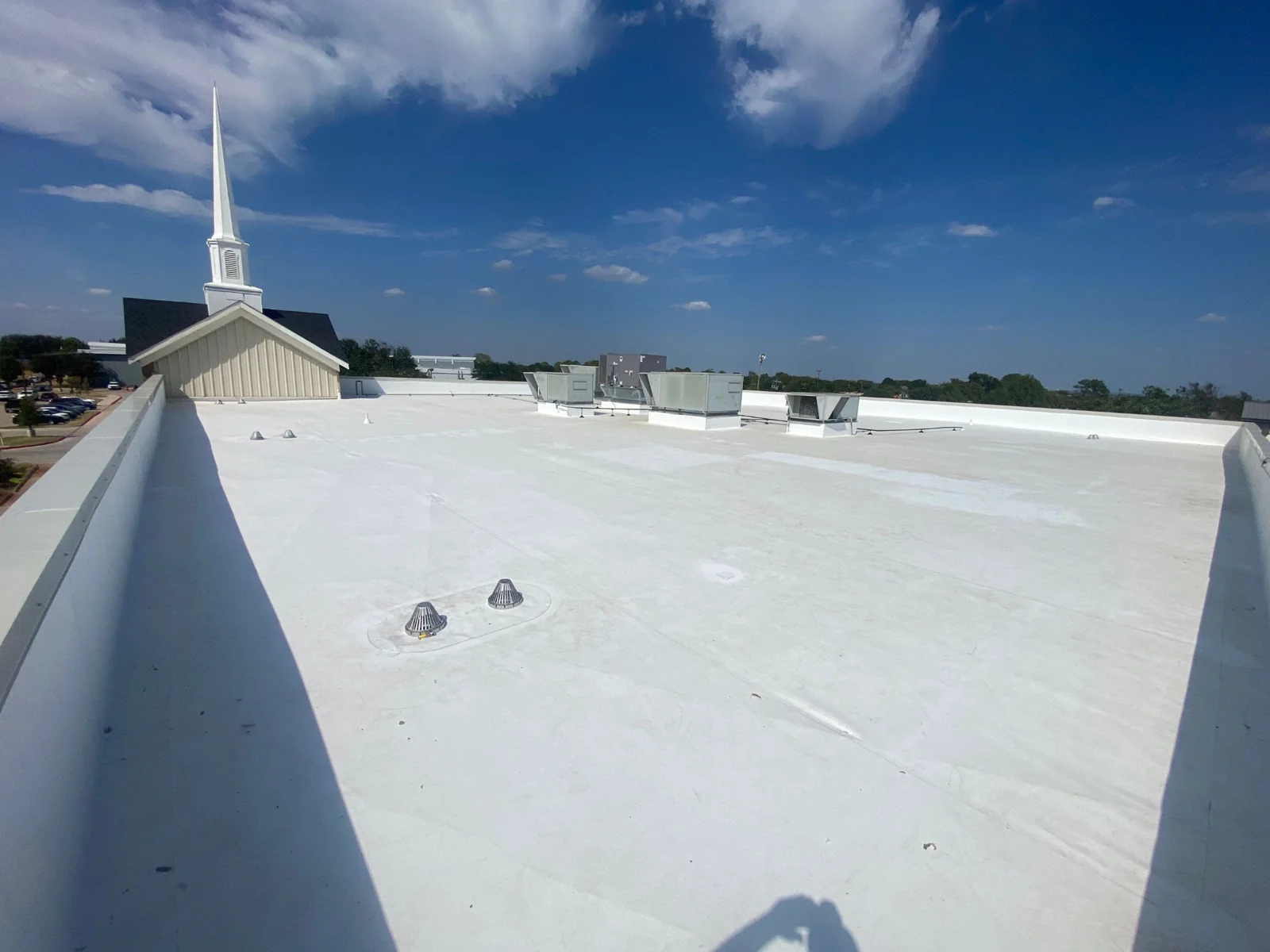
Start with the condition
A leak does not automatically mean a new roof. We inspect the existing assembly, explain the findings, and recommend a scope that fits the condition.
Your evaluation should leave you with documented findings, options, and a written scope for proposed work.
Flat, low-slope & metal roofs
You don’t need to identify the membrane before you call. We’ll look at the roof, drainage, equipment, and building use to discuss suitable options.
Ask about your existing roofA single-ply membrane with heat-welded seams. We evaluate the membrane, seams, flashings, and surrounding assembly.
A synthetic rubber membrane. Condition at seams, penetrations, and transitions helps shape repair or replacement planning.
A heat-welded membrane. Product compatibility and the building’s particular exposures matter when choosing an assembly.
An asphalt-based roof system. We assess the surface, laps, flashing, and existing layers before recommending work.
Standing-seam metal roofing needs system-specific detailing and maintenance. Connections, flashing, and drainage are part of the evaluation.
A restoration option for compatible roofs in suitable condition. A coating is not a substitute for addressing trapped moisture or underlying failures.
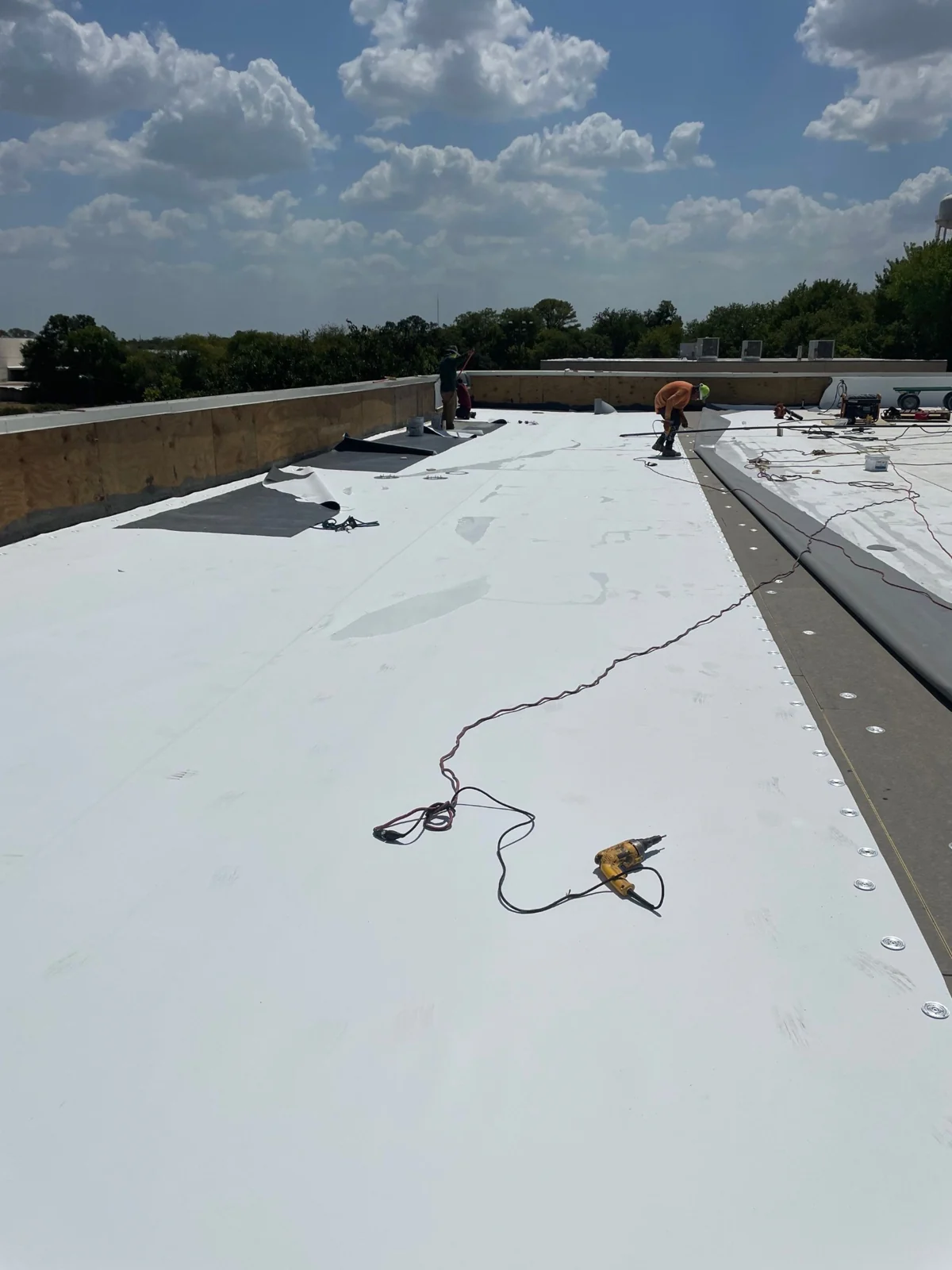
Plan around the business
Before work begins, discuss the constraints that affect tenants, staff, customers, and deliveries. The plan depends on your building and the agreed scope.
Agree on roof access, staging, equipment, protected areas, and noise-sensitive hours.
Coordinate the schedule and a point of contact for questions or changes.
Review the finished scope, cleanup, documentation, and ongoing care.
Commercial roof maintenance
A repeatable inspection routine helps identify developing problems. Plan it around the roof’s condition, warranty requirements, rooftop activity, and recent weather.
Wichita Falls & Denton
Choose the team near your property for local service information and office details.
Commercial roofing FAQs
Have storm damage or active water entering? Call to discuss the situation and inspection availability.
Storm-damage next stepsOur commercial work includes TPO, EPDM, PVC, modified bitumen, roof coatings, metal roofing, and other flat or low-slope assemblies. The appropriate system depends on the existing roof, drainage, building use, penetrations, access, and project goals.
Often, if the failure is localized and the surrounding assembly remains serviceable. We consider membrane condition, seam integrity, wet insulation, drainage, prior repairs, and the remaining useful life before recommending a scope.
No. Coatings require a compatible, adequately prepared, and sufficiently sound existing substrate. Moisture, adhesion, drainage, seam condition, and manufacturer requirements must be evaluated first.
We discuss access, occupied areas, deliveries, equipment, safety boundaries, noise-sensitive periods, and scheduling before work begins. The exact approach depends on the building and scope.
Inspection frequency should reflect the system, age, warranty requirements, foot traffic, rooftop equipment, drainage, and recent severe weather. Many owners benefit from a consistent inspection and maintenance routine rather than waiting for interior leaks.
Commercial roof evaluation
Include the property location, roof concerns, and any access or operating-hour constraints.
This form prepares an email in your mail app. You must send it; the team will confirm arrangements with you.
Active leak? Call directly940.395.9413